[ad_1]
There’s a moment in any Crazy Time session where the wheel hits a bonus round and the chat just explodes. Hundreds of little colored bubbles, people typing in six different languages, someone in all caps. You’re watching it happen in real time and for a second you forget you’re gambling – the focus shifts away from the result itself.
What Are Live Casino Game Shows?
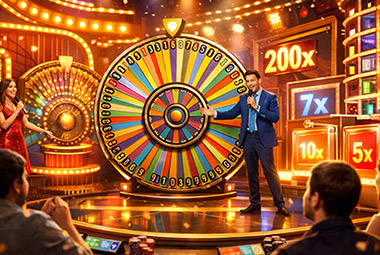 Live casino game shows are built around that shared moment. Crazy Time, Dream Catcher, and newer formats from studios like ICONIC21 and SA Gaming combine wheel mechanics, bonus rounds and live hosts with visible player activity. At a mechanical level, these games still rely on standard casino math. What changed is how that experience is presented, and how much of it feels communal rather than individual.
To see why this format gained traction, it helps to look at how live casino used to be structured.
How Live Casino Evolved Into Game Shows
Live casino formats were well established for years, but often felt limited in how they engaged players beyond the table itself.
The technology worked fine. You could watch a real dealer flip a real card through a real webcam and everything was perfectly legitimate and also somehow nearly hollow. You were alone in front of a screen watching a procedure. Evolution figured out somewhere around 2017-2018 that for some players, the table itself wasn’t the main draw. The surrounding experience played a larger role in how engaging a session felt. The feeling that something is happening that you’re part of, not just looking on from a distance. Crazy Time didn’t invent game shows. It just made the difference impossible to ignore.
Walk back through how live studio games got built even five years ago and it’s mostly mathematicians talking to each other. RTP, variance, house edge, table limits. All the stuff that matters and very little of the stuff that keeps someone in a session longer than twenty minutes.
What changed is that the math guys are still just out of sight, but now there’s someone next to them who used to produce daytime television and has opinions about lighting, about pacing and continuity, about how long a host can go without creating a moment. Studios like ICONIC21 run what’s basically a performer academy. The training isn’t just “here’s how the game works.” It’s charisma, storytelling, how to build tension before a result drops. Imagine Live went further and showed up at ICE 2026 more like a content house launching a new show than a gambling software company. Their game Land of Ra strips the table almost completely out of the visual design. What you’re looking at is closer to a game show set than anything you’d find in a brick-and-mortar.
Production, Hosts, and Player Engagement
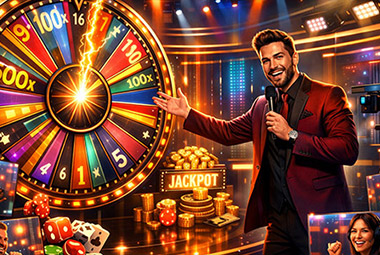 Production value can influence how long players remain in a session, even though it doesn’t affect the underlying odds.
The side bet and jackpot stuff fits in here too, but it came into live dealer gaming long before game shows did. Lightning Roulette’s number zaps, the progressive side pots in live poker variants, the bonus bet in Speed Baccarat that pays 200-to-1 on a natural nine – none of that changed the base game in most cases. They didn’t have to RTP to make the near impossible bets work, because most of them are lost anyway. What it did was give a certain kind of player a reason to stay when the core game simply wasn’t enough to get them to the table or keep them there. Thrill seekers, basically. Players who find standard table poker a little slow, who want a moment of real volatility tucked inside a session that’s otherwise grinding along. Game shows took in that instinct and made it the whole format instead of an add-on. The jackpot side bet in a live table game and a 500x multiplier slot on the Crazy Time wheel are doing the same job with player psychology. But if one’s a side door, the other’s the whole building.
The host relationship is worth being honest about too. The performer at Crazy Time is trained to feel like they’re rooting for you. They call out big wins in the chat, build tension on the wheel spin, react when the bonus round pays like they wanted it for you personally. Whether that’s warmth or just a more sophisticated way to keep you from hitting the back button is a question we’re all smart enough to sit with.
Beyond Evolution: Other Studios and Regional Formats
Evolution has the scale and the name recognition. The Netflix comparison everyone reaches for is fair enough, they’re everywhere and they set the production standard. Smaller studios have found real footing though, and the reason isn’t just that they’re cheaper to license.
The social formula hits differently depending on who’s in the room. SA Gaming and ICONIC21 have both built serious market share in Asian markets specifically because they took the game show format and ran it through regional game types. Teen Patti and Andar Bahar aren’t obscure niche productsin those markets, they’re what people actually grew up playing. Putting them inside a game show format with a host who understands the emotional connections to those games is a completely different thing from translating Monopoly Big Baller into another language. The communal win feeling works when the room feels like your room. Studios that got that right built something that size and scale can’t really copy. Challenger studios also move faster on new mechanics; crash variants showed up in live settings through smaller providers well before the major players got there, and that brings up something worth understanding about how the social layer actually works in crash, because it’s quite a bit different from what’s happening in a wheel game.
In a game show format, the chat and community energy are actually shared. Five thousand people are watching the same wheel, and when the 100x hits, the explosion in the chat is real. You all just experienced the same thing.
How Crash Games Approach the Social Element Differently
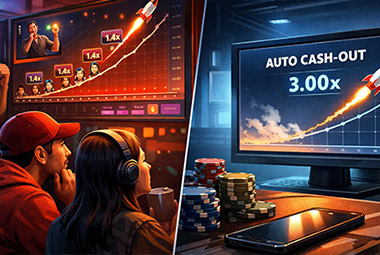 Crash is different. And nobody really says the cynical part out loud…
The live feed in crash – whether it’s showing other players’ cash-out points or running a host who’s narrating the action, is not there to make you feel connected. The feed can influence decision-making, especially when players see others cashing out earlier or later than expected. You set your strategy before the round. You decide you’re taking at 3x. Then you watch four people in the feed cash out at 1.4x and suddenly your 3x feels greedy, and you’re reconsidering something that didn’t need to be reconsidered. The house didn’t change the odds. The feed just got inside your decision.
Auto cash-out can help remove hesitation by locking in a decision before the round begins.Set your number before the round starts, let it execute, don’t watch the feed while the multiplier climbs. This is true whether you’re watching other players’ exits or a host doing live play-by-play while the number climbs. The job of both is to create hesitation. Your job if you want the best results, is to have already made the decision.
Bridging the Gap Between Slots and Live Games
There’s a parallel story running underneath all of this about how game shows solved a problem that had nothing to do with game shows, and that problem was onboarding. Getting a player who’s comfortable with slots into a live table game used to be very hard to do. The pacing is different, the etiquette is different, there’s a dealer looking at you (sort of), and if you don’t know the rules, the whole experience is just… anxious. Evolution’s first-person RNG games are a quiet answ er to that. First Person Blackjack, First Person Roulette, First Person Dream Catcher — you’re playing a fully animated RNG version of the game, solo, no pressure, and there’s a button sitting right there that drops you into the live version whenever you want. You can go from spinning a virtual Dream Catcher wheel alone to sitting at a real table with a real host and a crowd of excited gamblers in one click, already knowing what you’re doing. That’s a pretty elegant piece of design that doesn’t get talked about much.
First Person Craps did something people said couldn’t work at all. Craps has always been the game that live dealers couldn’t figure out – too many bets running at once, too fast, and the table itself is the social element in a physical casino in a way that’s genuinely hard to replicate through a screen. The earliest version took two hosts – one to croup and one to shoot the dice for you. The RNG first-person version let players learn the game at their own speed without a dealer waiting on them. Whether that fully bridges into a live craps product with real staying power is another question. Live craps tables exist now, but they haven’t caught on the way roulette or baccarat did, and a game show craps format hasn’t really shown up anywhere yet. It’s not hard to imagine what it would look like – multiplier bets on the pass line, a host calling the action, some AR element on the come-out roll, but nobody’s gotten there. Maybe that’s the gap the next challenger studio finds. It’s arguably the most exciting social game in a terrestrial casino – it simply hasn’t been translated well yet – a gameshow format might be the secret sauce that’s missing.
Perception, Trust, and Player Behavior
Some players place more trust in visible, physical elements of a game, even when the underlying mechanics are similar to RNG-based formats. Most of them grew up knowing that feeds and recommendations and outcomes are all shaped by invisible systems. That’s the baseline assumption. A physical wheel in 4K is observable. Not proof of fairness, just proof that something is happening in physical space and you can watch it happen. For someone who’s spent their whole life knowing the algorithm is hidden, the thing you can actually see has a pull that’s not irrational at all.
That said, the 1,000x multiplier chasing that game shows have normalized is slots behavior with better lighting and a live host. The volatility is real, the swings are fast, and the community energy makes it easier to reload than it would be sitting alone. That’s not a reason not to play. It’s just worth knowing what you’re actually doing.
AI personalization in this space is further along than most coverage suggests. The idea of a platform routing you toward a specific game show based on what kind of session you’re in rather than just your deposit history is already in early deployment with some operators. The more interesting thing is what might happen to the shared-room feeling when everything gets personalized. Part of what makes a game show work is that it’s the same room for everyone. When you start segmenting the audience and routing different player types into different versions of the experience, you might optimize for engagement and lose the communal thing that made it work in the first place. Nobody’s fully worked that out yet, and it’s probably the most interesting design problem in the sector right now.
Challenger studios will keep finding the gaps. Regional emotional resonance is a real moat. The format is still young enough that whoever figures out the next version of the shared-win feeling has a lot of runway ahead.
FAQ
- What’s actually different about a live game show vs. a regular live casino game?
The table is basically gone, or at least hidden. The experience is built around a host, a format, and a result that everyone in the room is watching together. The social layer is the product, not just a feature sitting on top of it.
- Is the community chat real or is it bots?
Both, depending on the operator and the time of day. Busy sessions are mostly real. Off-peak hours at smaller studios might get padded. If the chat is reacting faster than humans can type, it’s not humans.
- Does auto cash-out actually help in crash games?
Yes. Set it before the round, don’t watch the feed while it runs. The social layer in crash can create hesitation. Pre-committing removes that lever.
- Are smaller studios worth playing at or should I stick with the big names?
Depends what you’re after. If you want regional game types done well, or a more custom feel, studios like ICONIC21 and SA Gaming are worth checking out. RTP differences between providers are usually pretty small.
- Why do younger players seem to trust live games more than RNG slots?
A physical wheel you can see in 4K is just that, something tangible you can see. An RNG is not. For players who’ve grown up knowing invisible systems shape everything, “you can watch it happen” has real appeal even if it doesn’t actually prove anything about the underlying math.
[ad_2]
How Live Casino Game Shows Reshaped Live Dealer Play
Related Posts
Perkemahan Tunawisma Washington Bersihkan di bawah ancaman Trump dari tindakan keras
[ad_1] WASHINGTON (AP) - Pasukan Penjaga Nasional dan Humvve menjaga…

TaDa Gaming Meluncurkan Slot & Alat di IGE Roma
[ad_1] TaDa Gaming memamerkan slot tersertifikasi, permainan yang dipimpin streamer,…

Pengacara di Brasil menyerahkan Pernyataan Akhir untuk Bolsonaro dalam Pengadilan Kudeta | Berita Jair Bolsonaro
[ad_1] Mantan Presiden menyangkal keterlibatan dalam dugaan upaya untuk membatalkan…